
Caravan Solar Panels
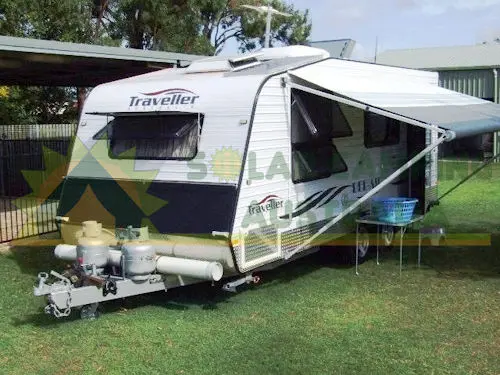
Solar power for caravanning
Caravan Solar Panels: Choosing the Right Setup
Explore Australia with greater flexibility using a solar charging system suited to your caravan. Whether you enjoy weekend getaways or extended trips away from powered sites, choosing the right panels, controller and battery setup starts with understanding your power requirements and available roof space.
Why Install Solar Panels on Your Caravan?
A suitable solar system can help replenish your caravan batteries during daylight hours and reduce your reliance on mains electricity or a generator. The amount of power available depends on panel capacity, sunlight, shading, battery storage and your daily consumption.
Caravan solar can help with:
- Supporting your 12V fridge and ventilation fans.
- Running LED lights and charging phones or other devices.
- Supplying power to water pumps and other compatible equipment.
- Replenishing battery energy while you are parked.
- Making longer stays away from powered sites more practical when your system is sized appropriately.
What Goes Into a Caravan Solar Setup?
A typical roof-mounted system combines solar panels with a charge controller, mounting hardware and suitable electrical protection. The exact components depend on your caravan, battery system and the kit you choose.
Solar Panels
Panels convert sunlight into electrical energy. Available wattages and dimensions vary, so choose a panel or combination that suits your energy requirements and the space available on your roof.
Solar Controller / Regulator
The controller regulates charging from the panels to the battery. It must be compatible with your panel configuration, battery voltage, battery chemistry and charging requirements.
Mounting Brackets and Roof Entry
Suitable mounting hardware secures the panels for travel. A roof cable entry housing can help route wiring into the caravan when installed and sealed correctly.
Cables, Fuses and Connectors
Correctly sized cables and appropriately rated protective components are important for a safe, reliable installation. Follow the supplied kit instructions and controller requirements.
Explore our solar panel kits to compare packages that group panels and installation components together. Always check the listed contents and specifications of the individual kit.
Choosing the Right Type of Solar Panel
The best panel type depends on your roof layout, available weight allowance, mounting options and whether you want a permanent or portable arrangement.
Rigid Solar Panels
Rigid framed panels are a common choice for permanent caravan roof installations.
- Available in a range of wattages and dimensions.
- Can be secured to suitable roof structures using appropriate mounting hardware.
- Require careful consideration of roof space, mounting and ventilation.
- Need to be positioned with shading and roof obstacles in mind.
Lightweight and Semi-Flexible Panels
Lightweight or semi-flexible panels may suit installations where weight or mounting constraints are important.
- Compare weight and dimensions carefully.
- Check that the mounting surface and installation method are suitable.
- Follow the manufacturer's requirements for support and ventilation.
- Confirm the panel's electrical ratings match the controller.
Portable Solar Panel Kits
Portable panels can be positioned in a sunnier location when your caravan is parked, which can be useful when the caravan roof is shaded.
- Can supplement a roof-mounted system.
- Can be packed away when not required.
- Need to be secured against wind and movement.
- Require suitable cable routing to avoid trip hazards and damage.
Pre-Configured Solar Kits
A solar kit can simplify selection by grouping components for a particular installation. Check the panel count, controller model, cable lengths and supplied mounting and protection components.
Additional materials may be needed depending on your caravan and installation.
Check Your Caravan Roof Space and Shading
Caravan roofs often have vents, hatches, aerials and air conditioners competing for space. These obstacles can restrict panel placement and cast shadows that reduce solar output.
- Measure the usable roof area before selecting panels.
- Allow room for brackets, cable entry points and access for maintenance.
- Consider shading at different times of day and at the campsites you commonly visit.
- Check the roof structure and confirm the mounting method is suitable for road vibration and weather exposure.
- Plan cable routing to reduce the risk of abrasion, water ingress and unnecessary cable length.
- Check the total installation weight against the caravan manufacturer's requirements.
How Much Solar Power Does Your Caravan Need?
Your solar requirements depend on daily electricity consumption, battery capacity, sunlight, shading and how long you expect to camp without mains power.
Start by listing the equipment you intend to use. For each item, estimate its current draw in amps and how many hours it runs each day. For equipment operating at the same system voltage, multiplying amps by hours provides an estimate of consumption in amp-hours (Ah).
For appliances rated in watts, multiply watts by operating hours to estimate energy consumption in watt-hours (Wh).
Example: estimating daily consumption
If an appliance draws 2 amps and operates for 4 hours per day:
2 amps × 4 hours = 8Ah per day
This is a simplified example assuming a consistent current draw. Actual consumption may vary during operation.
Add together the estimated consumption of your equipment. Then allow for charging losses, cloudy weather, shading and days when you use more power than usual.
A larger battery can store more energy, but it does not generate energy. Your charging system must be capable of replenishing the power you use.
Use our Panel Selection Calculator to help estimate your solar requirements.
Understanding Your 12V or 24V Battery System
Confirm your caravan's battery voltage before selecting solar panels and a controller. Many caravans use a 12V house battery system, while some installations use 24V or more complex electrical arrangements.
12V Battery Systems
Choose a controller that supports your 12V battery and its charging requirements. The panel voltage and configuration must be suitable for the controller.
Check the controller's input limits and the battery manufacturer's recommended charging settings rather than choosing by panel wattage alone.
24V Battery Systems
A 24V system requires a controller and solar configuration suitable for charging a 24V battery bank. Depending on the equipment, two compatible panels connected in series may be appropriate to increase the solar input voltage.
The correct arrangement depends on the panel specifications, controller limits and battery charging requirements. Not every controller or panel configuration is suitable.
If your caravan has a separate starting battery and house battery, check how solar integrates with the existing alternator charging system, DC-DC charger and other charging sources.
Choosing a Solar Controller and Battery
The solar controller regulates the power supplied by the panels to charge your battery. Compatible components help ensure the system operates within its electrical limits and follows the correct charging profile.
Check Controller Compatibility
Check the controller's maximum solar input voltage, current and power limits. The panel's open-circuit voltage (Voc) and short-circuit current (Isc) are important when checking compatibility.
Also account for the chosen series or parallel configuration and any voltage increase that can occur in cold conditions.
Match the Battery Type
Lead-acid, AGM, gel and lithium batteries can have different charging requirements. Confirm that the controller supports your battery chemistry and the charging settings recommended by the battery manufacturer.
Battery capacity, permitted discharge and the energy used overnight all influence how well a system meets your needs.
If you are unsure how to integrate solar with an alternator, DC-DC charger, inverter or existing multi-battery system, seek advice from a suitably qualified automotive or caravan electrical professional.
Caravan Solar Installations
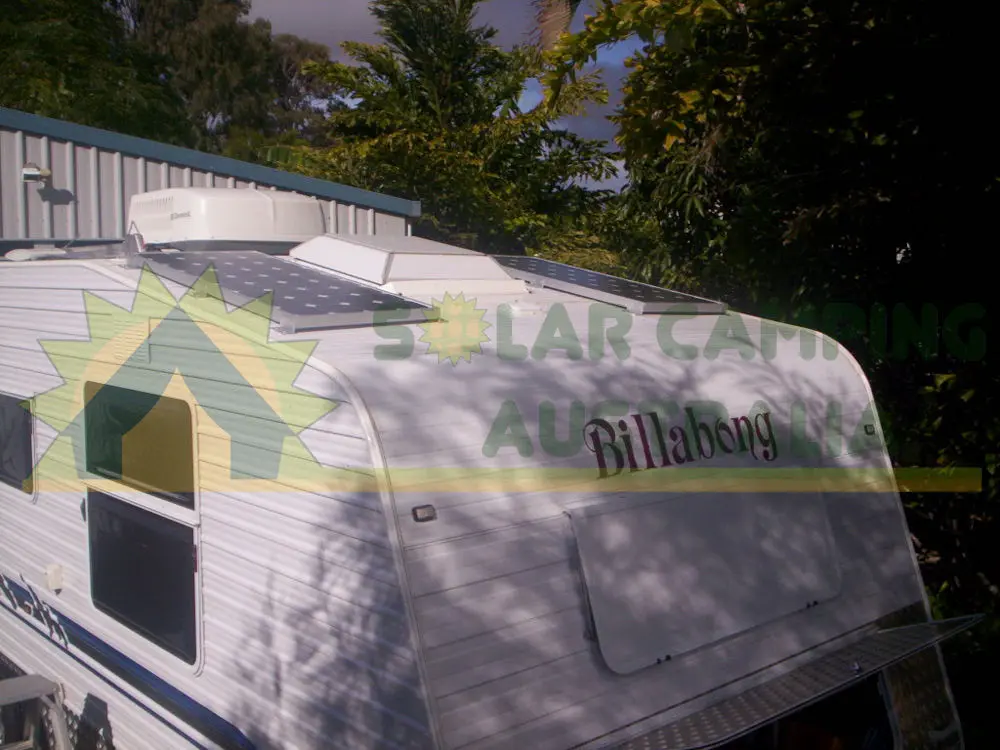
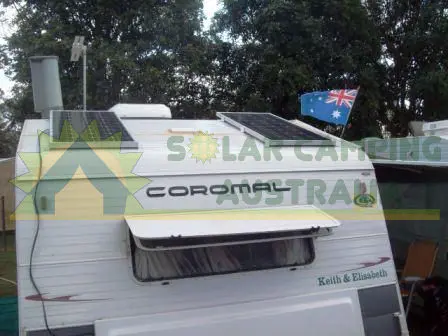
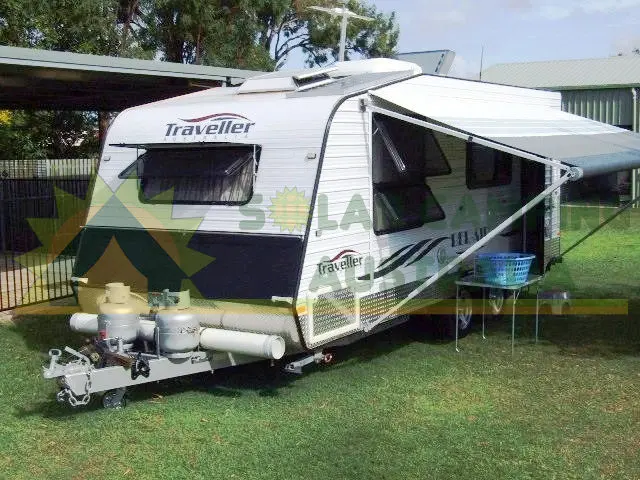
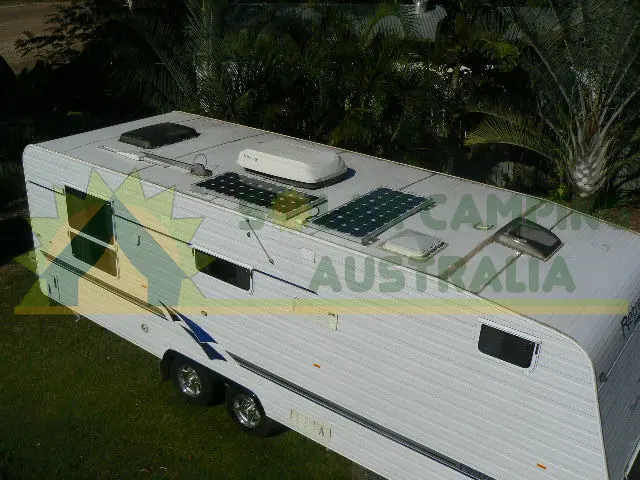
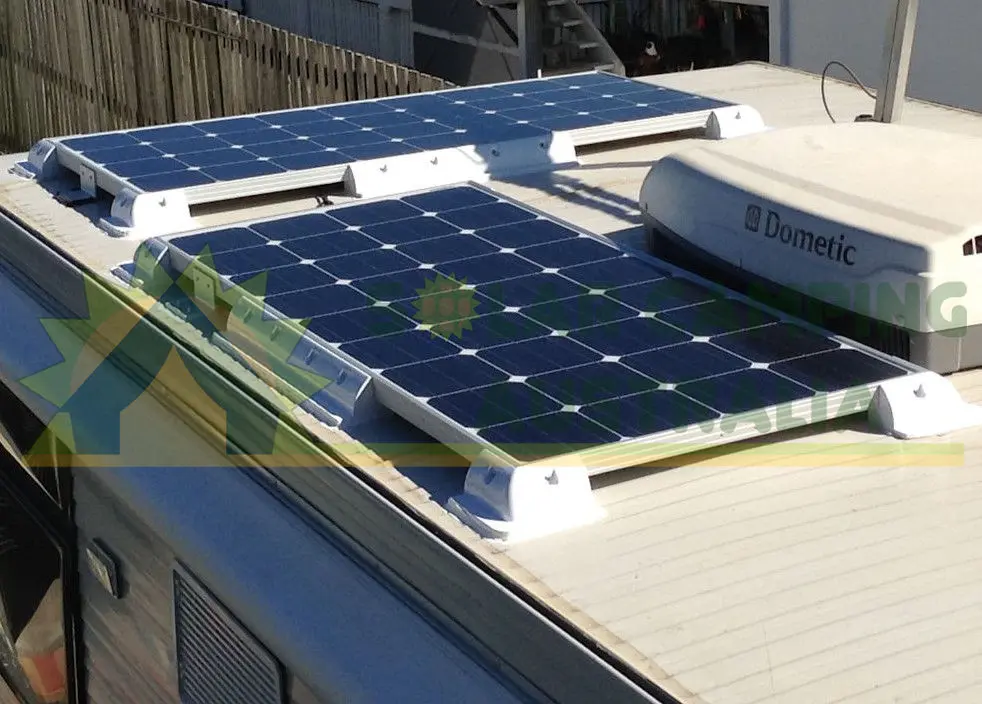
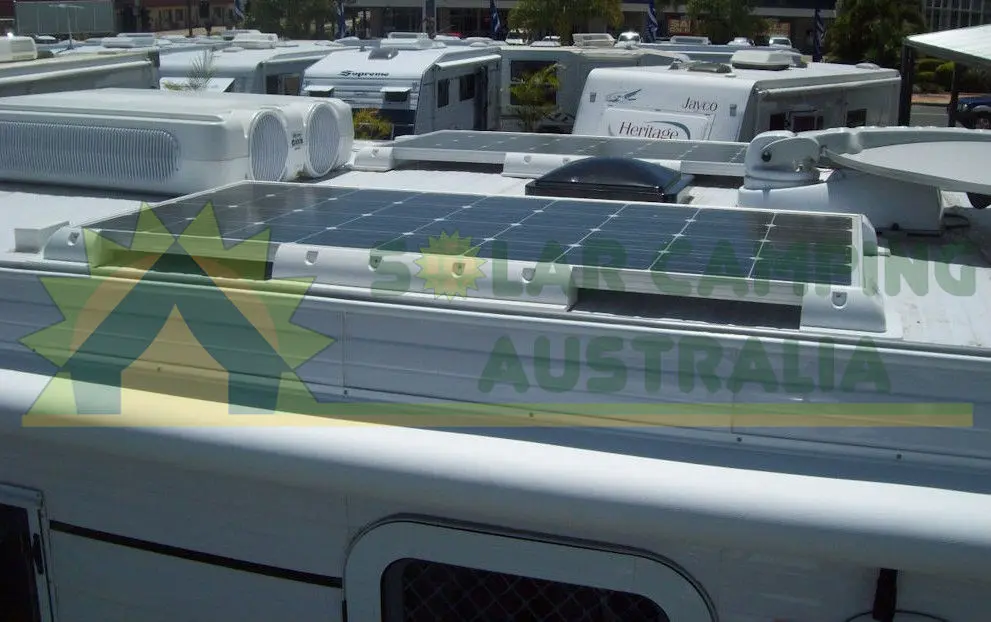
See examples of caravans fitted with solar panels purchased from Solar Camping Australia.
The real installation photos below show how solar panels can be incorporated into different caravan roof layouts.
Frequently Asked Questions About Caravan Solar Panels
How many solar panels do I need on my caravan?
This depends on daily energy use, available roof space, shading, battery capacity and expected sunlight. Estimate your consumption first, then compare suitable panel sizes. One or two panels may suit some setups, while higher energy requirements may call for a larger system.
Can solar panels run a caravan fridge?
Solar can help supply the energy used by a 12V fridge when the panels, controller and battery are suitably sized. Check the fridge's actual daily consumption and allow for overnight operation, other appliances and periods of reduced sunlight.
Will solar panels charge my caravan battery on cloudy days?
Solar panels can still produce electricity in cloudy conditions, but output is generally lower than in strong sunlight. Production may not be enough to meet your daily usage or fully recharge a depleted battery.
Can I add panels to an existing caravan solar system?
Often, yes, but the existing controller must be able to handle the additional panel capacity and the resulting voltage and current. Check the controller limits, wiring, battery requirements and panel configuration before expanding the system.
Do I need a solar controller?
A suitable charge controller is normally required when connecting solar panels to a caravan battery. It regulates charging and must be compatible with the panels, battery voltage and battery chemistry. Follow the instructions for your specific equipment.
Can I use portable solar panels with roof-mounted panels?
Portable panels can supplement a roof-mounted system, but the electrical arrangement must be compatible with the controller and existing installation. Check the controller's input limits and the portable kit's specifications before connecting additional panels.
Explore More Solar Resources
Panel Selection Calculator
Estimate daily electrical consumption to help compare potential solar panel sizes for your caravan.
Solar Installation Guide
Review installation stages, components and important checks for supported roof-mounted solar kits.
Controller and Regulator Manuals
Find instructions and operating information for supported solar controllers and regulators.
Frequently Asked Questions
Browse answers to common questions about solar products and choosing a suitable setup.
Find the Right Solar Setup for Your Caravan
Whether you need a roof-mounted panel, a complete solar kit or help checking compatibility with your existing battery system, start by identifying your daily power requirements and available space.
Explore our solar products or contact our team if you need help choosing suitable components.