
Motorhome RV Solar Panels
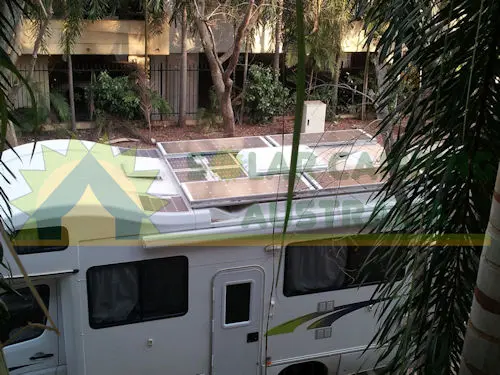
Solar power on the road
Motorhome & RV Solar Panels: Choosing the Right Setup
Solar panels can help keep your motorhome or RV batteries charged and support your electrical equipment when you are travelling or camping away from mains power. Choosing a suitable system starts with understanding your daily power use, battery setup, available roof space and the solar conditions you can expect.
Why Use Solar Panels on a Motorhome or RV?
A suitable solar charging system can reduce reliance on powered campsites and help replenish your batteries during the day. Depending on the system's capacity, sunlight and energy use, solar may support a range of onboard electrical equipment.
Common uses include:
- Maintaining the house battery while the vehicle is parked.
- Running LED lighting and charging phones or other small devices.
- Supporting a 12V fridge and ventilation fans.
- Powering water pumps and other low-voltage equipment.
- Providing energy for an inverter when the solar and battery systems are suitably sized.
Check Your Roof Space and Shading
Motorhome and RV roofs often have air conditioners, vents, aerials, skylights and other equipment competing for space. These can restrict the number and size of panels that will fit, and some may cast shadows across the panels.
- Measure the usable roof area before selecting panels.
- Allow space for mounting hardware, cable entry points and maintenance access.
- Consider shading at different times of day, not just when parked.
- Check the roof structure, waterproofing requirements and the panel manufacturer's mounting instructions.
- Plan cable routing to minimise damage, water ingress and unnecessary cable length.
How Much Solar Power Do You Need?
The right solar capacity depends on your daily energy use, battery storage, sunlight conditions and how often you travel or camp without mains power.
Start by listing the appliances and equipment you intend to use. Estimate each item's current draw in amps and the hours it runs each day. For equipment operating at the same system voltage, multiplying amps by hours gives an estimate of daily consumption in amp-hours (Ah).
For appliances rated in watts, multiply power in watts by operating hours to estimate energy use in watt-hours (Wh).
Example: estimating daily consumption
If an appliance draws 2 amps and operates for 4 hours per day:
2 amps × 4 hours = 8Ah per day
This is a simplified example assuming a consistent current draw. Actual consumption may vary during operation.
Add the estimated consumption of your equipment to build a picture of your daily energy requirements. Then allow for charging losses, cloudy weather, shading and days when you use more power than usual.
A larger battery stores more energy, but it does not generate energy. The charging system must still be capable of replenishing the energy you use.
Use our Panel Selection Calculator to help estimate your solar requirements.
Understanding Your 12V or 24V Battery System
Before choosing a solar panel, controller or kit, confirm the voltage and specifications of your house battery system. Many recreational vehicles use 12V systems, while some use 24V systems or have more complex electrical arrangements.
12V Battery Systems
A 12V battery system needs a compatible charging controller configured for the battery type and charging requirements. The panel's voltage must be suitable for the controller being used.
Check the controller's solar input limits rather than choosing a panel based on its wattage alone.
24V Battery Systems
A 24V system requires a controller and solar configuration suitable for charging a 24V battery bank. Connecting two compatible solar panels in series is a common option, as it increases the voltage to suit the system.
Do not assume that a panel marketed for 12V battery charging is suitable for every 24V system, or that any controller can accept any panel arrangement.
Choosing a Solar Controller and Battery
The solar charge controller regulates the power from the panels to charge the battery according to the controller's design and settings. Selecting compatible components is important for safe and reliable operation.
Match the Controller to the Panels
Check the controller's maximum solar input voltage, current and power limits. The panel's open-circuit voltage (Voc) and short-circuit current (Isc) are important when checking compatibility.
Also consider the panel configuration and the controller manufacturer's instructions, including any limits that apply in cold conditions.
Match Charging to Your Battery
Lead-acid, AGM, gel and lithium batteries can have different charging requirements. Check that the controller supports your battery chemistry and can use the charging settings recommended by the battery manufacturer.
If your vehicle has a separate starting battery and house battery, consider how solar charging integrates with the existing alternator charging system and other power sources.
If you are unsure how to integrate solar with an alternator, DC-DC charger, inverter or existing multi-battery arrangement, seek advice from a suitably qualified automotive or RV electrical professional.
Would a Solar Panel Kit Be Easier?
A pre-configured solar kit can simplify product selection by grouping compatible components for a particular application. Before purchasing, check exactly what the kit includes and whether it suits your battery system and installation.
Depending on the kit, components may include:
- One or more solar panels.
- A solar charge controller or regulator.
- Mounting brackets or other mounting hardware.
- Solar cable, connectors and protective components.
- Installation instructions or links to product manuals.
Contents vary between kits. You may need additional cable, fuses, mounting materials or other equipment depending on your installation.
Frequently Asked Questions About Motorhome & RV Solar Panels
How many solar panels do I need for my motorhome?
It depends on your daily energy consumption, available roof space, shading, battery capacity and expected sunlight. Estimate your daily usage first, then compare suitable panel sizes and charging options. There is no single panel count that suits every motorhome.
Can solar panels run a 12V fridge?
They can help supply the energy used by a 12V fridge when the solar, controller and battery system are sized appropriately. Check the fridge's actual daily consumption and account for other loads, cloudy weather and overnight operation.
Can I charge a 24V battery with solar panels?
Yes, if the panels and charge controller are configured for the battery system. Check the controller's permitted input voltage, current and power limits, along with the battery's charging requirements. The correct panel arrangement depends on the specific equipment.
Will solar panels charge my batteries on cloudy days?
Panels can still produce electricity in cloudy conditions, but output is generally lower than in strong sunlight. Production may not be enough to meet your daily usage or fully recharge a depleted battery.
Can I add solar panels to my existing motorhome system?
Often, yes, but the new panels must be compatible with the existing controller or a suitable replacement. Check the controller's limits, existing wiring, battery requirements and available mounting space before adding panels.
Do I still need another battery charging source?
That depends on your power consumption, solar capacity, battery storage and travel conditions. Solar can supplement charging from the vehicle's alternator or mains-powered charger, but it may not provide enough energy on its own in every situation.
Explore More Solar Resources
Panel Selection Calculator
Estimate your daily electrical consumption to help compare potential solar panel sizes for your setup.
Solar Installation Guide
Read general guidance on solar components, installation stages and product manuals.
Controller and Regulator Manuals
Find instructions and operating information for supported solar controllers and regulators.
Frequently Asked Questions
Browse answers to common questions about solar products and choosing a suitable setup.
Find the Right Solar Setup for Your Motorhome
Whether you need a roof-mounted panel, a portable kit or help checking compatibility with your existing battery system, start by identifying your power requirements and available space. Explore our solar products or contact us if you need help choosing suitable components.