
Boat Solar Panels
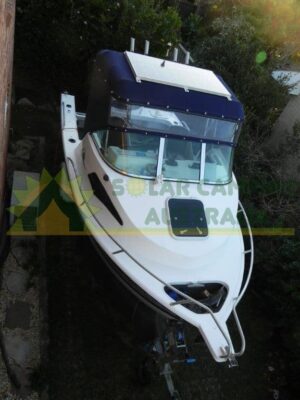
Solar power on the water
Boat Solar Panels: Choosing the Right Solar Setup for Your Boat
Solar panels can help maintain your boat's batteries and supply power to everyday onboard equipment while you are away from shore power. Whether you own a fishing boat, yacht, runabout or trailer boat, choosing a suitable solar setup starts with understanding your power requirements, available mounting space and battery system.
Why Use Solar Panels on a Boat?
A suitable solar charging system can help keep batteries charged while your boat is moored, at anchor or stored between trips. It can also reduce how often you need to run an engine purely to recharge your batteries, depending on your energy use and the amount of sunlight available.
Boat owners commonly use solar power to support:
- Battery maintenance between outings.
- Navigation equipment, fish finders and other electronics.
- Interior and exterior lighting.
- Communication equipment and smaller electrical loads.
- Fridges, pumps and other equipment when the available solar capacity is sufficient.
Choosing the Right Type of Boat Solar Panel
The best panel depends on where it will be installed, how much space is available and whether you want a permanent or portable solution.
Rigid Solar Panels
Rigid framed panels can suit permanent installations on suitable cabin roofs, hardtops and other secure mounting locations.
- Suitable for appropriately supported, permanent mounting.
- Available in a range of wattages and dimensions.
- Require a suitable mounting arrangement and secure attachment.
- Need to be positioned with shading and available space in mind.
Portable Solar Panel Kits
Portable folding panels can be useful when there is no suitable permanent mounting location or when you want to position the panels separately from the boat.
- Can be positioned to make better use of available sunlight.
- Can be packed away when not required.
- May suit smaller boats and occasional use.
- Need to be secured against movement and kept clear of walkways.
For any panel type, consider how it will be secured, exposed to weather and protected from damage in a marine environment.
How Much Solar Power Do You Need?
The amount of solar power required depends on how much electricity you use each day and how much sunlight your panels can receive.
Start by listing the equipment you want to power. For each item, estimate its current draw in amps and how many hours it operates per day. Multiplying the current draw by the operating hours gives an estimate of daily consumption in amp-hours (Ah) for equipment operating at the same system voltage.
For equipment rated in watts, daily energy use can be estimated in watt-hours (Wh) by multiplying its power consumption by the hours it operates.
Example: estimating daily consumption
An appliance drawing 2 amps and operating for 4 hours uses approximately:
2 amps × 4 hours = 8Ah per day
This example assumes the appliance operates at a consistent current. Actual consumption may vary.
Once you have estimated your daily consumption, you can begin comparing suitable panel sizes. Allow for cloudy weather, shading, charging losses and days when your energy use is higher than normal. A larger battery provides more storage, but it does not replace the need for sufficient charging energy.
Use our Panel Selection Calculator to estimate your solar requirements.
Choosing a Solar Controller and Battery Setup
A solar panel needs a suitable charging arrangement to charge a battery safely. The correct components depend on the panel's electrical specifications, the battery system and the way the boat is wired.
Match the Controller to the Panel
Check the controller's permitted solar input voltage, current and power limits. The panel's open-circuit voltage (Voc) and short-circuit current (Isc), along with the controller manufacturer's instructions, are important when selecting a compatible controller.
Do not assume that every controller can accept every panel configuration.
Match the Charging Settings to the Battery
Different battery chemistries have different charging requirements. Check that the controller supports your battery type and can be configured to the manufacturer's recommended charging settings.
If your boat has a separate starting battery and house battery, you may need a charging arrangement designed for the way those batteries are used and connected.
Check the battery manufacturer's recommendations before changing charging settings. If you are unsure how to integrate solar charging with an existing alternator, shore charger or multi-battery system, seek advice from a suitably qualified marine electrical professional.
Frequently Asked Questions About Boat Solar Panels
Can a solar panel keep my boat battery charged?
Yes, a correctly sized solar charging system can help maintain a compatible battery when the boat is not in use. The result depends on the battery's condition, its self-discharge rate, connected loads, sunlight and the charging system. A panel may not keep up if equipment continues drawing power or the boat is frequently shaded.
Can I use a portable solar panel on my boat?
A portable solar kit can be suitable if it is compatible with your battery system and can be positioned securely in a suitable location. Protect the panel and leads from movement, water exposure beyond their ratings and trip hazards. Check whether the kit includes a controller and the connections needed for your intended use.
Will a solar panel charge my boat battery on a cloudy day?
Solar panels can still produce electricity in cloudy conditions, but output is generally lower than in strong sunlight. The amount of energy produced may not be enough to meet your daily consumption or fully recharge a depleted battery.
Can I run a boat fridge from solar power?
Potentially, yes. You need to calculate the fridge's actual daily energy consumption and allow for other onboard loads, battery storage, solar output and periods of poor sunlight. The suitability of a system cannot be determined from the fridge's rated wattage alone.
Does solar replace my boat's alternator or shore charger?
Not necessarily. Solar can supplement other charging sources, but whether it can meet your needs on its own depends on your energy consumption, panel capacity, battery storage and weather conditions. Many boats benefit from having more than one suitable charging source.
Explore More Solar Resources
Estimate Your Solar Requirements
Work through your estimated daily electrical consumption to help compare potential solar panel sizes.
Solar Installation Guide
Read general guidance on solar components, installation stages and related product manuals.
Find the Right Solar Setup for Your Boat
Whether you need a panel for battery maintenance or a larger setup to support your onboard equipment, choosing compatible components is the first step. Explore our solar products or contact us if you need help identifying a suitable option for your application.