
Camper Trailer Solar Panels
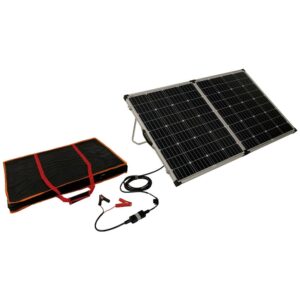
Solar power for camper trailers
Camper Trailer Solar Panels: Choose the Right Setup
Camper trailers give you the freedom to explore places where powered campsites may not be available. A well-planned solar setup can help recharge your battery while you are camped, without needing to move your trailer into direct sunlight. The best arrangement depends on your camping habits, battery capacity, available roof space and the equipment you want to run.
Plan Around the Way You Camp
Camper trailer solar requirements can change considerably from one trip to the next. A weekend away with a few lights and charged devices places different demands on a battery than several days of running a fridge, water pump and other electrical equipment.
Before choosing panels, consider how your campsite and daily routine affect charging:
- How many days do you normally camp without mains power?
- Do you run a fridge continuously or use other regular electrical loads?
- Do you prefer shaded campsites beneath trees?
- Is there enough suitable roof space for fixed panels?
- Will you need to pack away your equipment quickly when moving camps?
Thinking through these details first helps you decide whether fixed panels, a portable kit or a combination of the two will suit your trips.
Roof-Mounted or Ground-Deployed Solar?
Where you camp can be just as important as the rated wattage of your panels. Trees, changing shade and the orientation of your parked trailer can all affect how much sunlight reaches a roof-mounted array. Consider these practical differences before choosing your setup.
Fixed Solar Panels
Fixed panels are attached to a suitable mounting surface on the trailer. Once installed, they can generate power without requiring you to set up separate equipment every time you arrive at camp.
- Convenient for frequent touring and regular camping.
- Uses available roof space rather than a separate ground area.
- Can charge the battery whenever conditions allow and the trailer is parked.
- Requires suitable mounting, cable routing and roof clearance.
- Performance may be reduced if trees or nearby objects shade the panels.
Check panel dimensions and allow for the space required by the mounting brackets before planning your layout.
Portable Folding Solar Kits
Portable panels give you more control over where sunlight is collected. You can park the trailer in a comfortable shaded spot and position the panels separately in an area receiving better sunlight.
- Useful at campsites with limited direct sunlight on the trailer.
- Can be repositioned as the sun moves.
- Can be packed away when you leave camp.
- Requires suitable space and safe placement of the panels and leads.
- Needs regular attention to positioning and security while in use.
Check whether the kit includes a controller, battery leads and the connection type needed for your trailer. Inclusions differ between products.
Consider your usual campsite. Fixed panels suit owners who value convenience, while portable panels can be especially useful when the trailer is shaded. A combined setup may provide both convenience and flexibility, provided the components are compatible.
How to Estimate Your Camper Trailer's Solar Needs
Start with the energy your equipment uses rather than choosing a panel solely by its wattage. Your fridge, lighting, water pump and charging devices all contribute to daily consumption. The amount of solar required to replenish that energy depends on the sunlight available and the efficiency of the complete charging system.
1. List Your Electrical Equipment
Record the power consumption of each appliance and estimate how long it operates each day. If equipment is rated in amps, multiply its current draw by its operating hours to estimate amp-hours (Ah) at the same system voltage.
Example: 2A × 4 hours = 8Ah
Repeat this calculation for each item, then add the estimates together to work out your approximate daily consumption.
Fridges and other appliances may cycle on and off, so their actual daily consumption can differ from a simple continuous-current calculation.
2. Allow for Less Favourable Conditions
Solar generation varies with the season, cloud cover, shade, panel orientation and installation conditions. Allow for charging losses and periods when the panels cannot produce their rated output.
If you regularly camp beneath trees or stay for several days in poor weather, you may need more panel capacity, additional battery storage or another suitable charging source to meet your requirements.
A larger battery stores more energy, but it does not generate energy itself. Panel capacity and battery storage need to work together.
Use our Panel Selection Calculator to help estimate the solar capacity for your setup. Treat the result as a starting point and consider your battery capacity, expected sunlight and periods of higher power use.
Check Your Camper Trailer's Battery and Charging Setup
Before buying a panel or kit, identify the battery you intend to charge and check the existing charging equipment. A camper trailer may have a house battery for campsite appliances and separate arrangements for charging from a tow vehicle. The solar connection needs to suit your particular system.
Choose a Compatible Solar Controller
The solar controller manages the power supplied to the battery. Its input limits must suit the panel's electrical specifications and the way panels are connected. Its battery settings must also support the battery manufacturer's charging requirements.
Check the controller's permitted solar input voltage, current and power. Do not assume that panels can be connected in series or parallel without checking the controller's limits and the kit instructions.
Confirm Battery Type and Capacity
Check whether your battery is lead-acid, AGM, lithium or another type, and confirm that the controller supports it. Follow the battery manufacturer's recommendations for charging voltage and settings.
Battery capacity affects how much energy is available overnight and during cloudy periods. Consider both your daily consumption and how much usable energy your battery can provide.
If your trailer has a DC-DC charger, vehicle charging circuit or multiple batteries, confirm how the solar input integrates with the existing arrangement before making changes.
Check before connecting. Confirm the polarity, connectors, cable ratings and protection requirements in the supplied product instructions. Use suitable fuses and follow the controller and battery manufacturer's installation guidance.
Camper Trailer Solar Installation Considerations
A suitable panel needs more than enough wattage. Its position, mounting method and cable route must also work with the construction and layout of your trailer.
Measure Before Choosing Panels
Check the available mounting area, panel dimensions and bracket clearance. Make sure the planned position does not interfere with hatches, roof fittings or other equipment. Confirm that the mounting surface is suitable for the proposed installation.
Allow for the space required by brackets and check that panels can be mounted securely for travel.
Plan the Cable Route
Solar cables need a suitable route between the panels, controller and battery. Consider how the wiring will enter the trailer, how it will be protected from abrasion and movement, and how connections will remain accessible for inspection.
Use appropriate cable protection, connectors and electrical protection for the installation. Follow the supplied kit instructions or consult a qualified installer if you are unsure.
For roof-mounted kit installation information, visit our Solar Panel Kit Installation Guide . Check the instructions supplied with your particular kit before drilling, mounting panels or making electrical connections.
Camper Trailer Solar Panel FAQs
Is roof-mounted solar enough for a camper trailer?
It may be enough if the available panel capacity can replace your daily energy use under the conditions where you camp. Consider appliance consumption, battery capacity, roof space and the likelihood of shade. A portable panel can provide another option when roof panels receive limited sunlight.
Can I charge my battery while the camper trailer is parked in the shade?
Yes, if you use a portable panel positioned in a sunnier area and connect it using a suitable charging arrangement. Ensure the cable can reach safely, the panel is secure and the connections are compatible with your battery system.
How much solar do I need to run a camper trailer fridge?
The required panel and battery capacity depend on the fridge's actual daily energy consumption and the other equipment you use. Check the fridge specifications or measured consumption, then allow for reduced solar generation during cloudy weather and shaded conditions.
Can I add portable solar to my existing roof panels?
In some systems, additional panels can be connected through a suitable arrangement. Before combining panels, check their electrical specifications, the controller's limits, connector compatibility and the manufacturer's instructions. An additional controller or a separate charging arrangement may be appropriate for some setups.
Will solar keep my battery charged when the camper trailer is stored?
A suitably sized solar system may help maintain a battery during storage, provided it receives enough sunlight and the controller supports the battery's charging requirements. Check the battery manufacturer's storage recommendations and monitor the system periodically.
Should portable panels be left connected while travelling?
Portable folding panels should be packed away and secured according to their instructions before moving the trailer. Fixed panels must be installed for travel and checked according to the mounting system manufacturer's guidance.
Do solar panel kits include everything needed for installation?
Kit inclusions vary. Check the product listing for panels, controller, mounting brackets, roof cable housing, wiring, fuses, connectors and other supplied parts. Additional materials or installation work may be required depending on your trailer and the selected kit.
Useful Solar Planning Resources
Estimate Your Solar Requirements
Use your estimated daily power consumption to help compare panel sizes for your camper trailer.
Understand Solar Panel Specifications
Learn how panel voltage, current and wattage ratings help you check compatibility with your controller and battery charging system.
Choose Solar for Your Next Camper Trailer Trip
Start with your daily power use, the space available on your trailer and the places you normally camp. Compare fixed solar panels and portable folding kits, then check that the controller and battery arrangements suit your setup. Explore our range or contact our team for help choosing compatible solar components.